What this is
the ceremony
Bring to mind what you are holding that no longer serves you. Write it down — as briefly as a single name or word, or as fully as a letter. Then set it alight and watch it turn to ash. As the smoke rises, the thing you named leaves with it.[1][2][4]
The act releases on every level at once. Writing forces a half-formed feeling into something specific and complete; burning makes the leaving unhappenable — once the paper is gone, it cannot be re-read, reconsidered, or taken back — and that finality is precisely what lets you put it down.[4] That is why, across very different traditions, the details repeat: still yourself, name it, write it, burn it, let it go.
The objects
what people actually use
The classic is a fire-proof bowl or pot — commonly brass, ceramic, or cast iron — set on a heat-safe surface. A fireplace, fire pit, or any contained outdoor flame works just as well.[1][2]
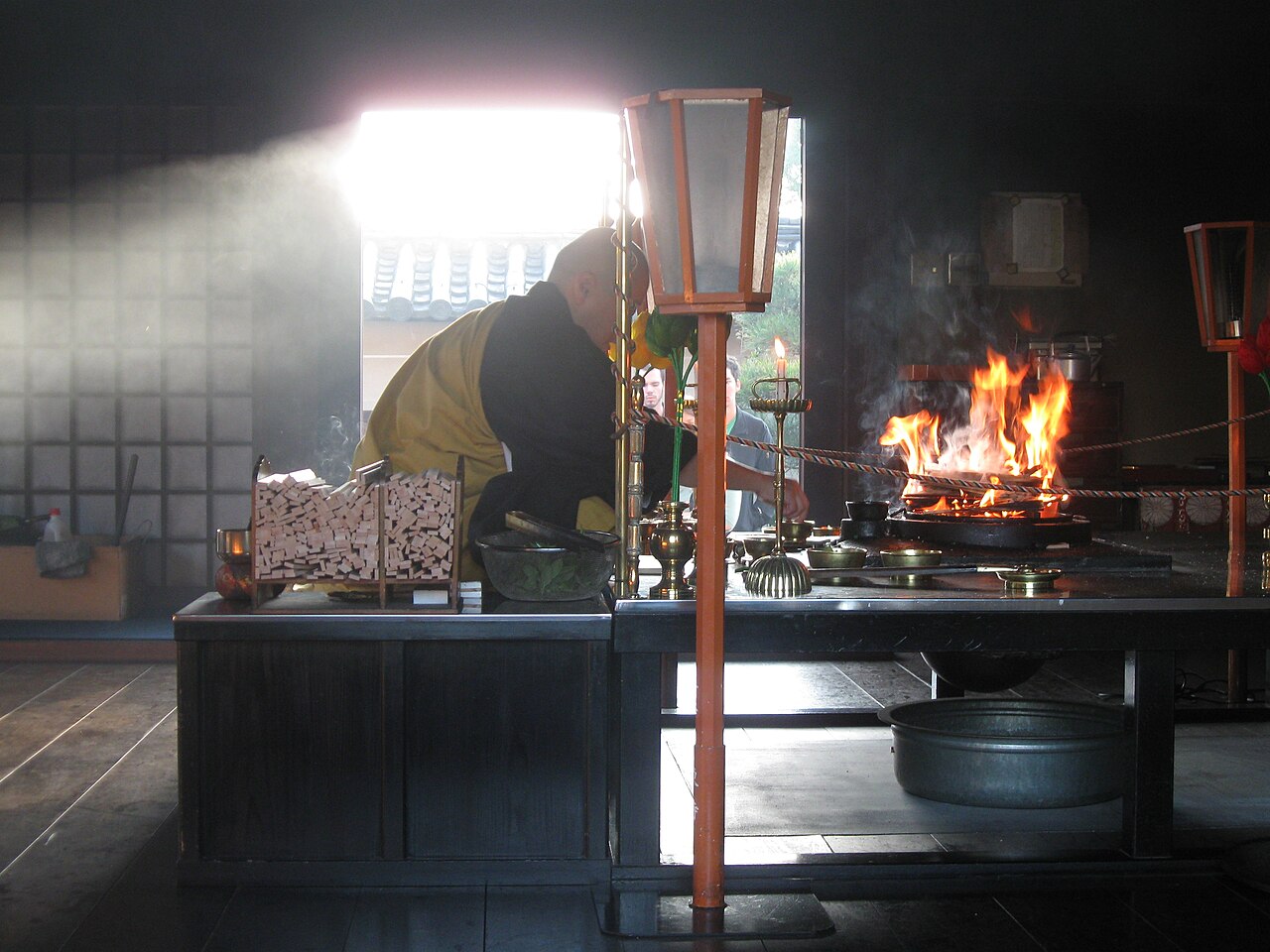
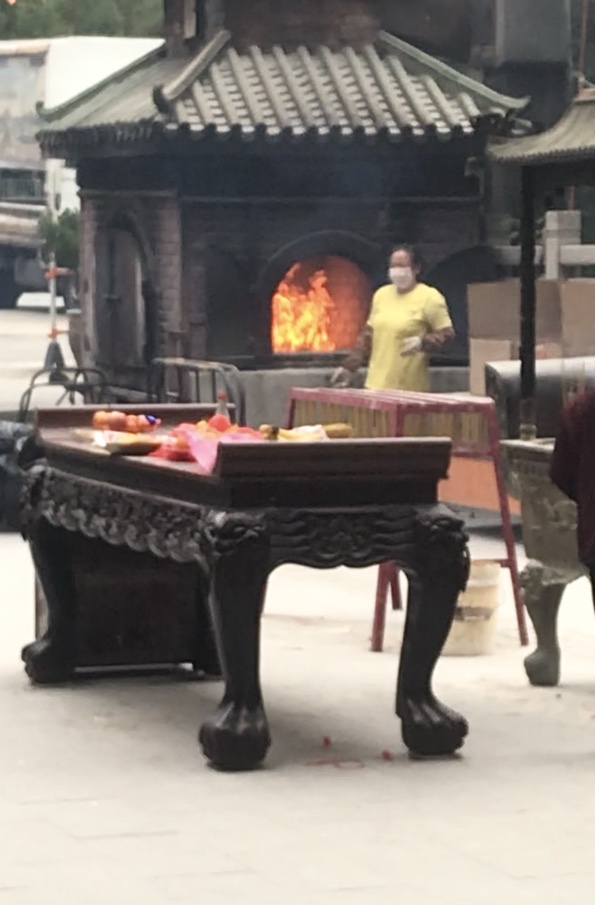
In the Japanese goma rite, the fire burns on a dedicated altar, the gomadan, tended by priests who feed the written tablets into it.[9] In Taiwan, the burning of spirit money happens in temple urns and curbside metal drums.[11]
Usually nothing special: a small slip of paper or a torn corner of an old sheet, anything honest and small enough to burn willingly.[2]
Some favour “flying wish paper” — a wafer-thin rice-paper that catches instantly, lifts into the air as it burns, and is gone within seconds. Quick, weightless, and finished, it matches the feeling of release.[2]
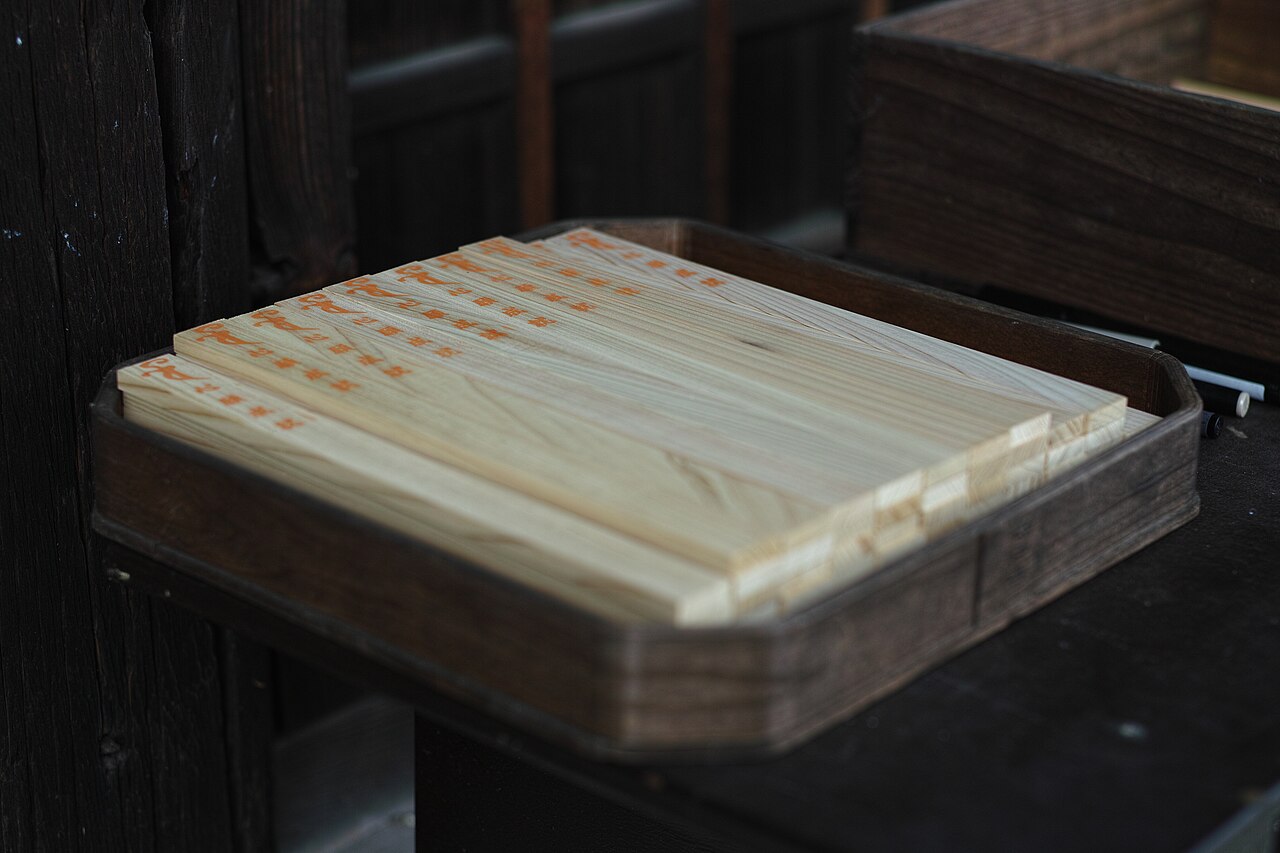
Two older materials deserve mention: in Greco-Roman practice people wrote on thin sheets of lead (the defixio), and in Japanese Buddhism the wish is written on a slender wooden tablet, the gomagi.[9][10]
There is no ceremonial pen. An ordinary pen or pencil is always enough — the weight of the gesture is in the writing, not the implement, and the act of putting it down begins the letting-go.[2]
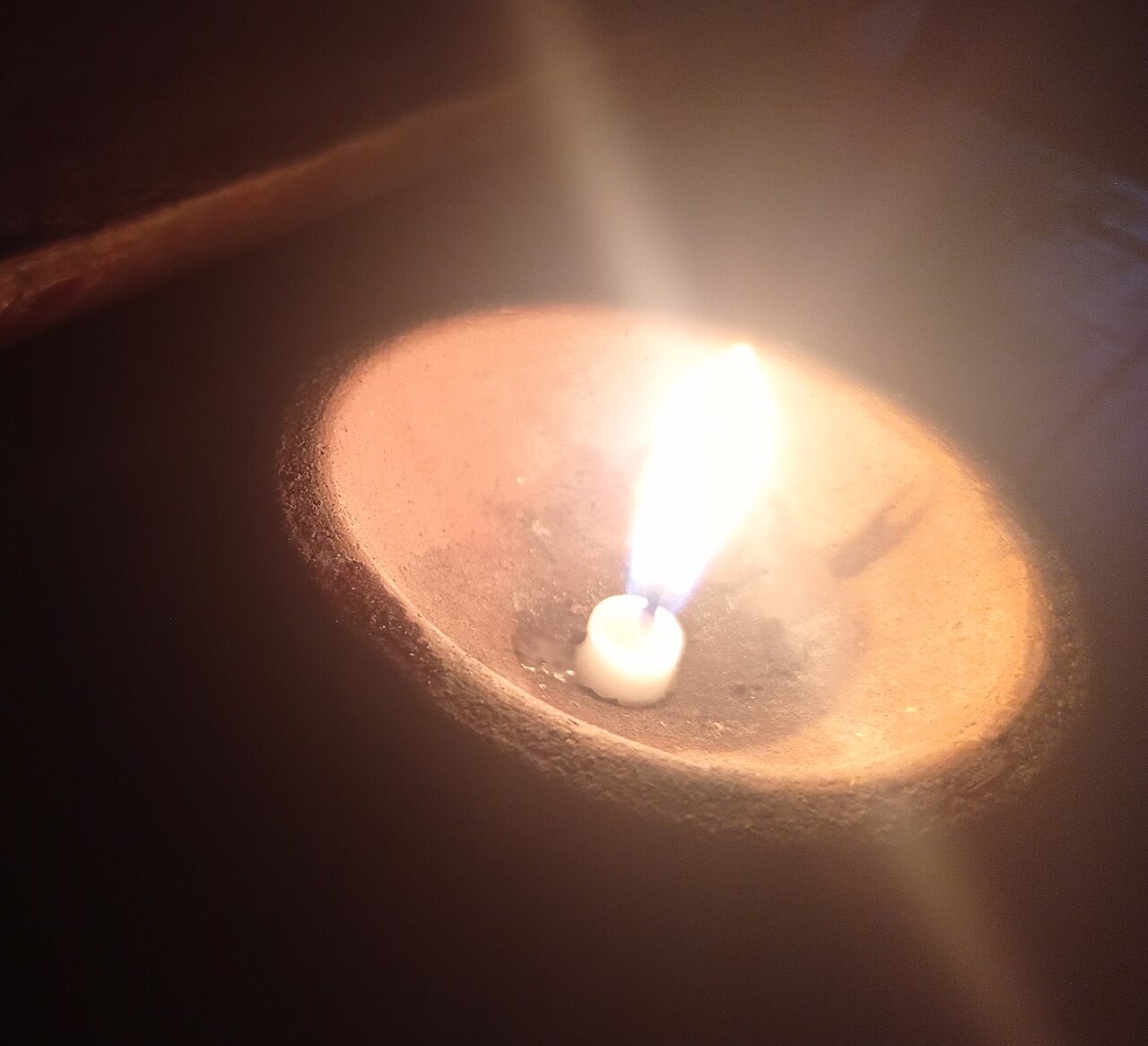
No single way is prescribed. People light the slip from a candle, with a match or lighter, or drop it straight into a fire already burning.[1][2][4] In quiet individual ceremonies the paper is often lit from a single candle held over the bowl; in group ceremonies each slip is lit and dropped in turn (Goddess Provisions; Unity).
Extras are optional and chosen for intent rather than rule: some light a candle first or add cinnamon sticks, sage, or cloves to the bowl — cinnamon is taken as fire’s element and thought to raise the spiritual vibration of the rite.[3] Two things are never optional: water within reach and never leaving a burning slip unattended.[2][4]
TheBest123XD · CC BY-SA 4.0 · Wikimedia Commons
SarKaLay · CC BY-SA 4.0 · Wikimedia Commons
Shii · CC BY-SA 3.0 · Wikimedia Commons
Where the tradition comes from
older than you think
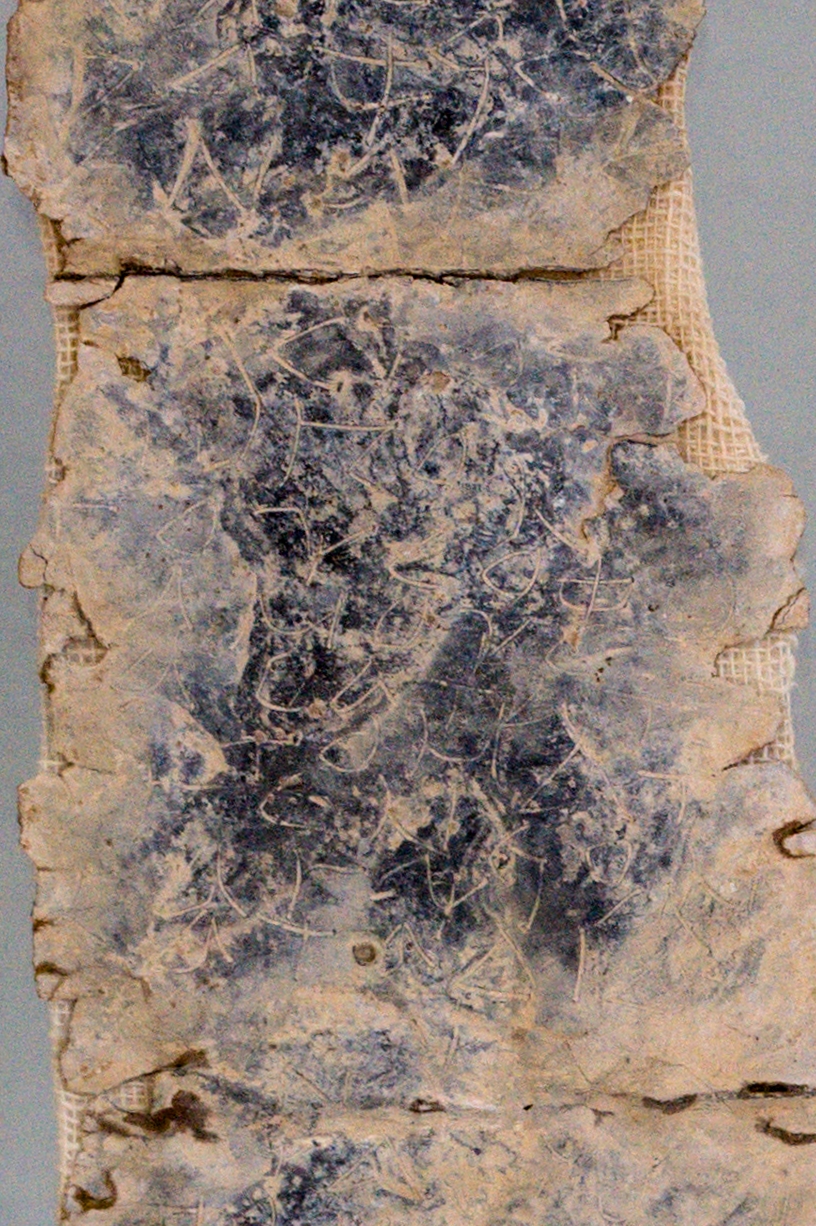
Writing on lead, to bind and release
Long before paper, people scratched words onto thin sheets of lead — the defixiones or “curse tablets” — folded or pierced them, and left them in wells, graves, and sanctuaries. It is the oldest surviving evidence of writing-something-down-to-be-rid-of-it (usually buried or sunk rather than burned).[10]
Zde · CC BY-SA 4.0 · Wikimedia Commons
Smoke as prayer, and the worry basket
Among indigenous peoples of the Americas, smoke has long carried thoughts and prayers up to the Great Spirit. Some groups kept a living-space “worry basket” (also called a burden basket) where people left slips of paper inscribed with their troubles, to be unloaded rather than carried.[1][3]
Spirit money — paper given to fire
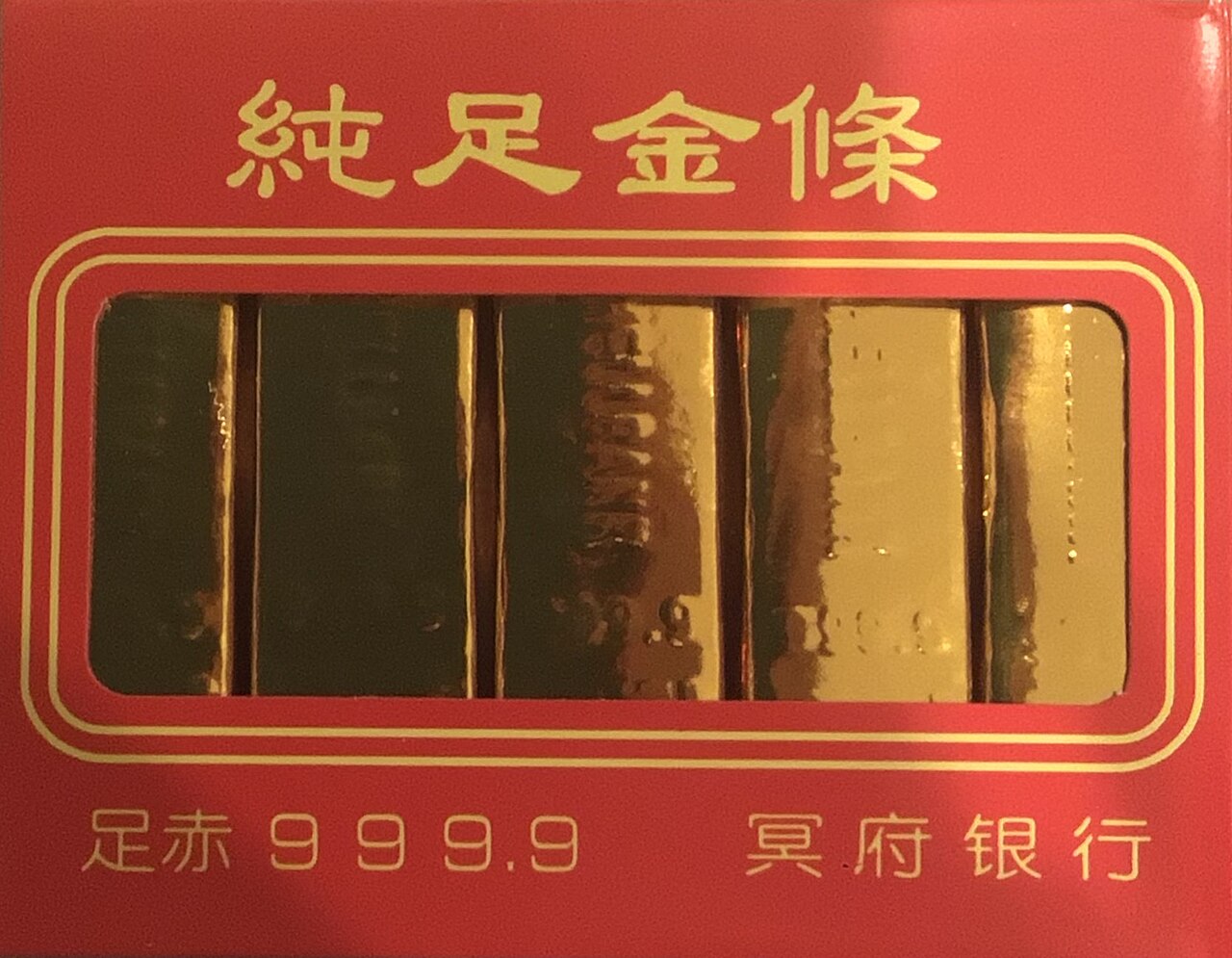
In Chinese and Taiwanese ancestor practice, printed sheets of “spirit money” are burned in temples and metal drums so their value passes on to the departed — an enormous, everyday version of consigning paper to fire so something moves onward.[11]
Dustfreeworld · CC BY-SA 4.0 · Wikimedia Commons
Goma — the prayer made of wood and flame
The closest living ancestor of “write it, then burn it” is the goma fire rite. A worshipper writes a wish — today often a name and a prayer — on a thin wooden gomagi tablet, and a priest feeds it into a sacred fire kept before the deity Fudō Myōō. Fire carries the prayer and purifies the mind and body together.[8][9]
halfrain · CC BY-SA 2.0 · Wikimedia Commons
The Burning Bowl
Unity and other New Thought churches formalised it as the Burning Bowl, a nondenominational New Year ceremony: write down the year’s burdens and consign them, as a community, to a fire — an alternative to resolution-setting.[1][2]
Zozobra, “Old Man Gloom”
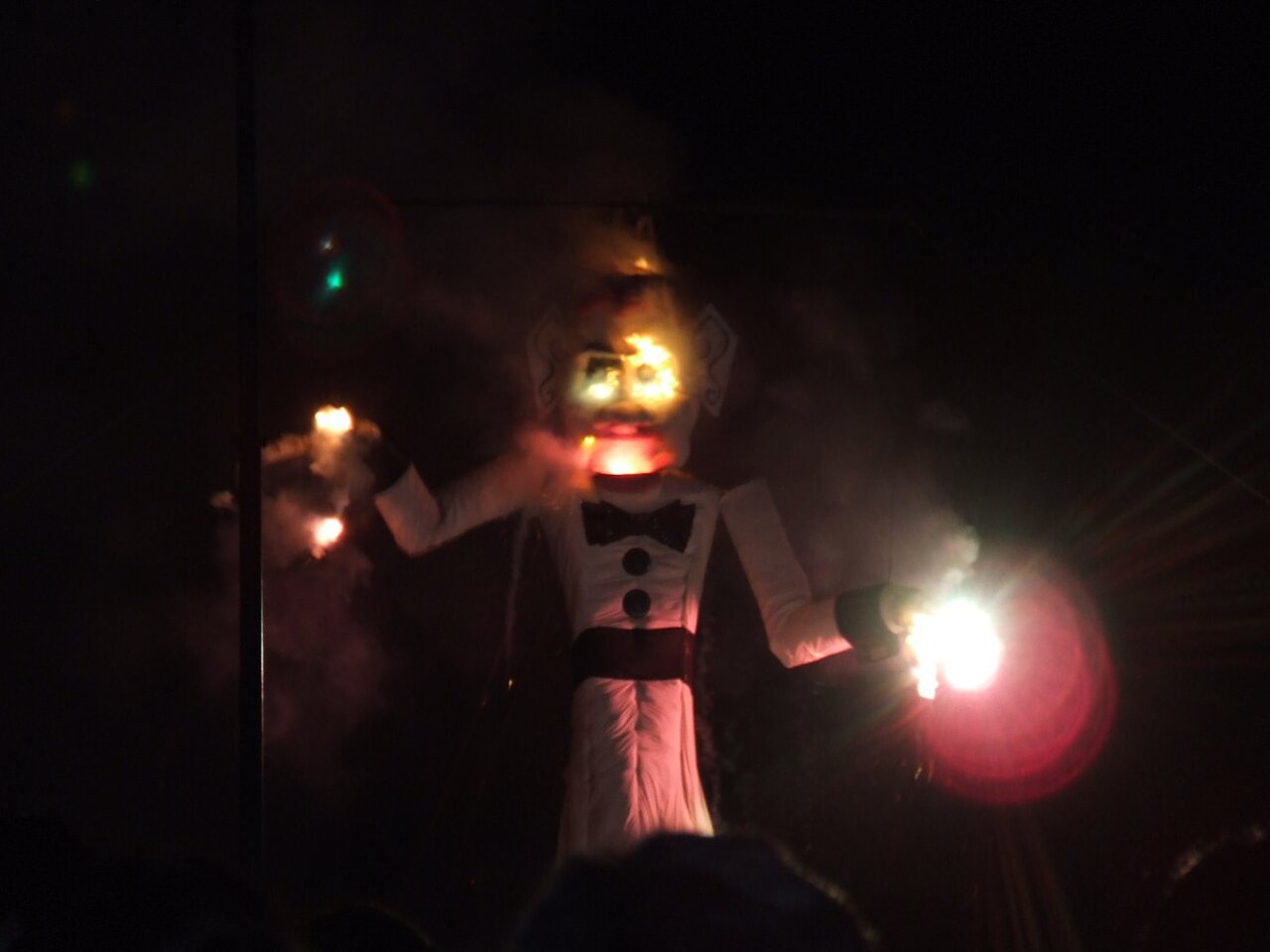
Each Labor Day weekend in Santa Fe, tens of thousands mail in written “glooms” — worries, regrets, heartbreaks — which are stuffed inside a towering effigy and set ablaze. It began in 1924 when the artist Will Shuster burned a small gloom-doll in his backyard; today it is a city-wide letting-go.[5][6][7]
Rvaldez4108 · CC BY 3.0 · Wikimedia Commons
The burn letter
In grief and anger work, therapists offer the burn letter: write, honestly and unfiltered, everything you were never able to say — to a person, a situation, or a past version of yourself — and burn it. You are not sending it; you are releasing it.[4][12]
How it goes
a simple order
- Settle. Find a quiet place where you won’t be rushed. Close your eyes, breathe slowly for a few minutes, and decide precisely what you are ready to set down. A candle or low music can hold the mood.[1][3]
- Write. On your slip of paper, name it. It may be one word — a name, a job, an old habit — or a full, unfiltered letter to someone or to yourself. Do not edit it; the more honest, the more it releases.[1][2][4]
- Read it back once. Acknowledge what you wrote, silently or aloud, and let yourself feel it. This is the moment it stops being a thought and becomes something you can put down.[4]
- Light it. In a safe place, light the paper from a candle, a match, or the fire itself, and lower it into your fire-proof vessel.[4]
- Watch it burn. Let the flame take it completely. Visualise the worry leaving you with the smoke, and give yourself permission to feel whatever surfaces — relief, sadness, lightness.[1][4]
- Speak the release. Close with a short affirmation — “I release this. I no longer carry it forward” — so the letting-go has a final word.[1][4]
- Release the ash. When cool, scatter the ashes to the wind or pour them into running water, away from you and your home.[1][2]
Fire, with respect
A ritual is only sacred if it is safe. The same order appears in every serious guide:
- Burn only in a proper fire-proof container, on a heat-safe base, outdoors or somewhere the smoke is welcome.
- Keep it away from anything flammable — curtains, books, hair — and keep water or a fire extinguisher within arm’s reach.
- Never leave a burning slip unattended, and wait until the ashes are fully cold before touching them.
- No safe fire to hand? Tear the slip into small pieces and dispose of it — the finality, and the release, survive without the flame.[2][4]
Write it, so it is real. Burn it, so it is done. The words go up in smoke, and you are lighter for standing in it.
Sources
Photographs are reproduced from Wikimedia Commons under their Creative Commons licenses; each is credited and linked beside the image. Text sources:
- Unity.org — How to Use a Burning Bowl Ritual to Release the Past
- Live Life Spiritual Direction — The Burning Bowl: Release All That Does Not Serve
- NowWithPurpose — The Burning Bowl Ceremony: Out with the Old
- Insights by Omkar — Burning Letter Ritual: Materials, Timing, Steps & Aftercare
- Zozobra — The Tradition of Burning Glooms / The Gloom Box
- Happiness Archive — Burn Your Worries, Woes, and Morbid Thoughts to Ashes
- Santa Fe Selection — Burning of Zozobra, Old Man Gloom
- Temple Notes — What Is Goma? A Beginner-Friendly Guide
- Japanese Wiki Corpus — Gomagi
- Wikipedia — Curse tablet (tabella defixionis / katadesmos)
- Taiwan Merch — Joss Paper: Why Taiwan Burns Ghost Money by the Ton
- Spirituality & Health — A Letter-Writing Burn Ritual for Healing